Arriving in Madagascar is usually straightforward if your documents are in order, but the rules and fees do change, and unofficial websites confuse many travellers. Most visitors come on a short-stay tourist visa, which can be arranged in advance as an e-visa or processed on arrival at the international airports. This guide explains what to prepare, how the two options compare, and what happens after you land at Ivato in Antananarivo or at other international gateways such as Nosy Be.
Treat official government sources as the final word. Fees, stay lengths and which nationalities need extra paperwork can be updated with little notice. What follows is practical planning advice, not a substitute for the official e-visa portal or your nearest Madagascar embassy.
Passport and Basic Entry Rules
Your passport should be valid for at least six months from the date you arrive and should have blank pages for the visa and entry stamp. Immigration officers may also want to see proof of onward or return travel and, in some cases, an idea of where you will stay. Keep a printed or offline copy of your hotel list or tour confirmation, even if you are travelling flexibly.
These are the documents that prevent most delays:
- A passport with enough validity and blank pages
- Your e-visa authorisation if you applied online, printed and also saved on your phone
- A return or onward ticket, or a clear explanation of your exit plan
- Payment in euro, US dollars or by card, depending on the counter and the day
- The address of your first hotel or the name of your receiving agency
Visa on Arrival or e-Visa?
For many nationalities, a tourist visa can be issued on arrival at the main international airports. You fill in a form, pay the fee for the duration you need, and receive a stamp or sticker in your passport. Queues vary with the number of incoming flights. If several aircraft land close together, the process can take a while, especially if you also need to change money and collect bags before meeting a driver.
The official government e-visa lets you apply online before you travel, usually between about one week and six months ahead. After your application is checked, you receive an electronic authorisation, often within a few days and officially within about 72 hours of validation. You still pass through immigration on arrival, but you go to the e-visa desk with the authorisation already paid. Online fees are generally aligned with the fees charged on arrival, which is why the e-visa is mainly a way to save time and reduce uncertainty, not a way to pay less.
Be careful which website you use. The official portal is the government e-visa site. Third-party agencies add service charges and are not required. If a site looks like a booking platform or asks for far more than the published government fee, stop and go back to the official address.
Apply before departure, pay by card and bring the authorisation to the airport. Best if you want shorter queues and a fixed payment in advance.
Available at the main international airports for many travellers. Allow extra time and bring more than one payment method.
Useful if your nationality has special rules, you need a different visa type, or you prefer a sticker before you fly.
How Long Can You Stay?
Tourist stays are organised in short bands, commonly up to 15 days, 16 to 30 days, 31 to 60 days, and in some cases up to 90 days. The exact bands, and whether a very short stay is treated as a visa or as an entry with an administration fee, have changed over time, so you should confirm the current options on the official portal when you book flights.
As a planning rule, most holiday itineraries fit comfortably in a 30-day or 60-day tourist visa. A two-week trip with a buffer for delayed domestic flights is easier on a 30-day visa than on the shortest band. The tourist e-visa is typically a single-entry visa. If your itinerary includes a side trip to Réunion, Mauritius or mainland Africa and a return to Madagascar, check whether you need a multiple-entry visa from an embassy instead.
Extensions are often possible in Antananarivo at the immigration office, up to a maximum total stay that is commonly 90 days for tourists. The process takes time, requires photographs and forms, and should not be left until the last day. If you already know you need two months, it is simpler to request that duration at the start.
- Book an Antananarivo airport transfer to the city centre so your driver waits after immigration.
- Read our practical guide to Antananarivo airport transfers and the wider airport transfers in Madagascar.
- If you fly on the same day to the coast, see how to plan a short stop in Antananarivo.
What the Visa Usually Costs
Fees are set in euro and US dollars and can be revised. Recent official bands for short-stay tourist visas have been in the region of about EUR 10 to 30 for the shortest stays, about EUR 35 for around 30 days, about EUR 40 for around 60 days, and about EUR 50 for stays approaching 90 days, with dollar equivalents published alongside. Because these figures change, use them only as a budget range and check the official table before you pay.
On arrival, counters may accept euro, dollars or ariary, but notes often need to be in good condition, and card machines can go offline. Carry some cash in euro or dollars as a backup. Keep the receipt with your passport. There is no benefit in buying a visa from a reseller at a marked-up price.
| Item | Typical planning range |
|---|---|
| Short tourist visa or entry fee | About EUR 10 to 50, depending on duration |
| Unofficial agency service charge | Often unnecessary; use the official portal if you apply online |
| Passport photos for an extension | A few euro in Antananarivo, plus your time at the office |
| Airport transfer, Ivato to city hotel | About EUR 25 to 45 per vehicle |
Arriving at Ivato and Other Airports
Most long-haul passengers arrive at Ivato International Airport, about a 45- to 90-minute drive from central Antananarivo depending on traffic. After landing you will go through health or document checks if they are in force, then visa and immigration, then baggage claim and customs. If you already have an e-visa, follow the signs for that queue. If not, follow visa-on-arrival.
Once you exit, a pre-booked driver is the calmest option, especially after a night flight. A private transfer avoids negotiating a taxi with luggage when you are tired. If you are continuing the same day to Andasibe, Morondava or a domestic departure, tell the team your flight number and how many bags you have so the pickup is timed with a little slack.
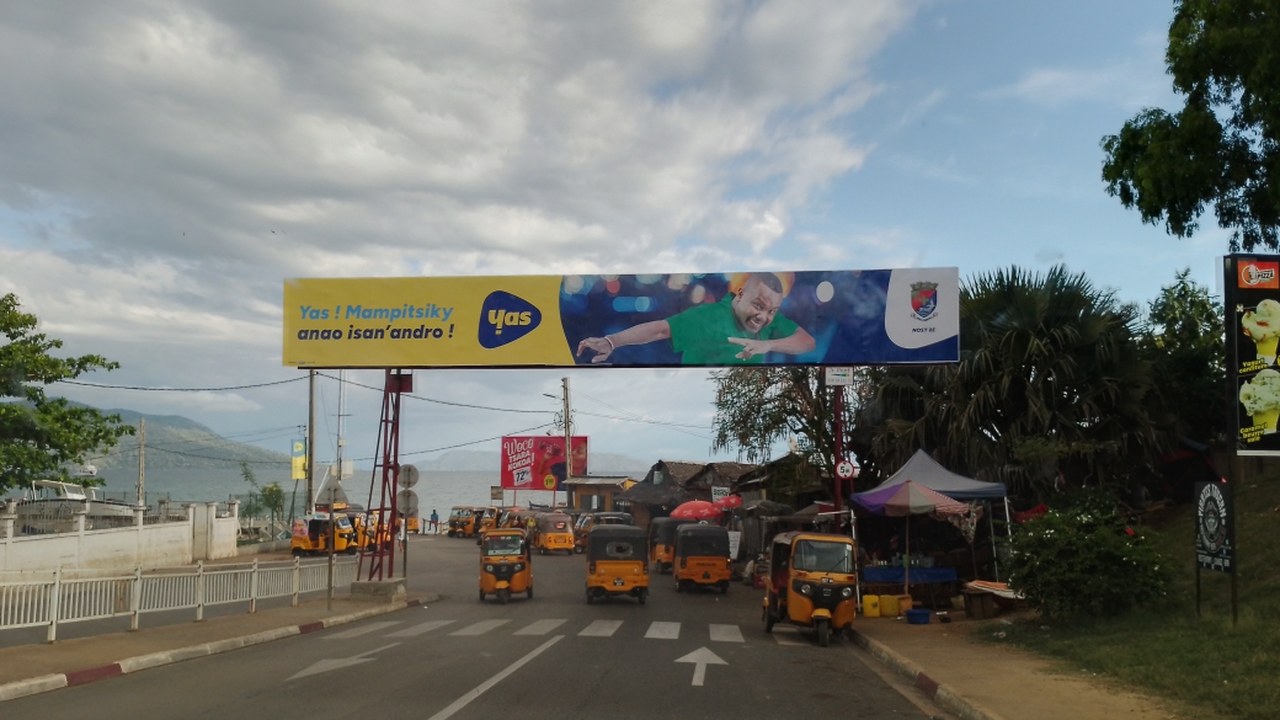
International arrivals also use Nosy Be, and some seasonal or regional flights use other airports. Visa-on-arrival facilities are aimed at the main international gateways. If you enter through a smaller airport, confirm the procedure with your airline and the official portal before you travel.
Common Mistakes to Avoid
- Applying on a lookalike website instead of the official government portal
- Choosing the shortest stay when your itinerary has no spare days for delays
- Assuming a tourist visa is multiple-entry if you plan to leave and return
- Arriving with a passport that will expire within six months
- Leaving an in-country extension until the final days of your visa
- Forgetting that your first hour in Madagascar is easier with a booked transfer
After Immigration: Your First Day
Most travellers sleep in Antananarivo after a long-haul flight, then start overland to Andasibe or fly on to the coast the next morning. A city night also gives you a buffer if baggage is delayed. If you have a full day before your onward flight, a gentle outing such as the Lemurs Park excursion or the Ambohimanga Sacred Hill excursion is more pleasant than sitting at the airport.
Keep digital and paper copies of your visa, passport photo page and travel insurance. Cash in ariary is useful for small purchases, but you do not need to change a large amount at the airport if your driver and hotels are already booked. ATMs exist in the capital and in larger towns; they are scarce in remote parks.
Where This Fits in Your Trip Planning
Once the visa question is settled, the rest of your plan is about season, route and transport. Read the best time to visit Madagascar before you lock dates, and look at popular itineraries and routes if you are still choosing a circuit. Our local team can attach airport pickups, domestic flight connections and a private driver to a trip that already matches your visa length.
If you are connecting immediately to the west or the north, confirm that your visa duration covers the whole stay plus a spare day. Travellers who add a last-minute extension on the coast sometimes discover that the paperwork is easier to complete in the capital than in a small town.
Frequently Asked Questions
Do I need a visa for Madagascar?
Most visitors need a tourist visa or an official short-stay authorisation. Many nationalities can obtain this as an e-visa or on arrival, but you should confirm the current rule for your passport before you fly.
Is it better to apply online or on arrival?
Online is usually calmer if the official portal is working and you can pay by card. Visa on arrival remains a valid option at the main international airports if you prefer to do it there and can allow extra time.
How long can I stay on a tourist visa?
Typical bands run from a short stay of about 15 days up to 30, 60 and sometimes 90 days. Choose a duration that covers your full itinerary with a small buffer.
Can I extend my visa in Madagascar?
Often yes, in Antananarivo, up to a maximum total stay commonly set at 90 days for tourists. Start the process early and bring the documents listed by the immigration office.
What should I do immediately after landing?
Clear immigration, collect your bags and meet your pre-booked driver. A private airport transfer is the simplest way to reach your hotel or your onward connection.
Get Your Free Custom Madagascar Tour Quote Today!
Share your dates and arrival flight. We will plan the pickup, the first night and a route that fits the length of your stay.
Browse Multi-Day Tours Explore Short Excursions